

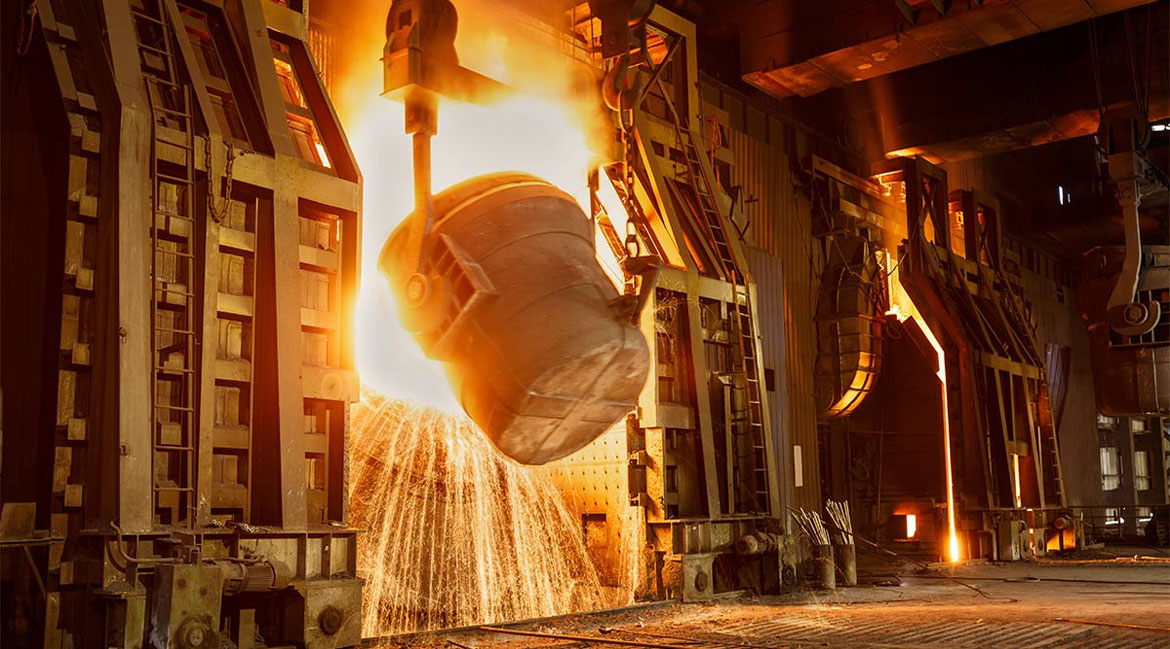
Steel — the backbone of modern civilization — shapes our cities, vehicles, bridges, and industries. From skyscrapers in Dubai to railways in India and automobiles in Japan, steel’s demand continues to grow globally. But how this essential material is produced varies across regions, depending on technology, resources, and environmental priorities. In this blog, we’ll explore the different steel production methods used around the world, their efficiency, sustainability, and how innovation is redefining this vital industry.
Blast Furnace–Basic Oxygen Furnace (BF–BOF) Method
Dominant Regions: China, Japan, South Korea, Europe The Blast Furnace–Basic Oxygen Furnace route is the traditional and most widely used method, accounting for nearly 70% of global steel production.
How it works:
- Iron ore, coke (carbon), and limestone are fed into a blast furnace.
- The furnace produces molten iron (also called “hot metal”).
- The molten iron is then transferred to a Basic Oxygen Furnace (BOF), where oxygen is blown in to reduce carbon content, forming molten steel.
Advantages:
- High production capacity
- Efficient for large-scale steelmaking
Electric Arc Furnace (EAF) Method
Dominant Regions: United States, Turkey, India, Middle East The Electric Arc Furnace method uses electricity instead of coke to melt scrap steel or direct reduced iron (DRI). It’s known for being more flexible and environmentally friendly than the traditional BF–BOF method.